
An alternative to major booking platforms for hosts
Visibility, calendar, payments, commissions, and tracking: the essential criteria for choosing a booking platform suitable for your accommodation.
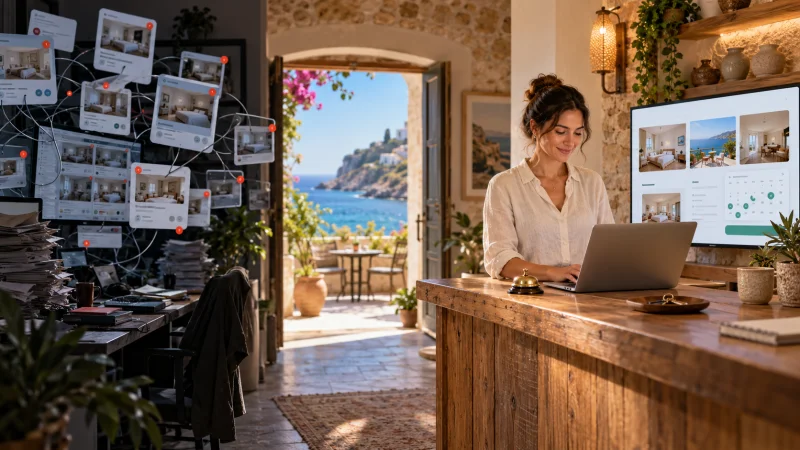
For an independent hotel, a guesthouse, a holiday cottage, or a vacation rental, being visible online has become essential. But the question isn’t just about where to list your property. You also need to consider who controls the prices, how availability is managed, when payments are collected, and whether the commissions are easy to understand.
Choosing an alternative to the big booking platforms can help diversify your online presence without completely disrupting your organization. The key is to pick a solution that fits the size of your property and the way you work.
Don’t rely on just one booking channel
A well-known platform can bring a lot of visibility, but it usually imposes its own way of working. An independent website gives more freedom, but it requires time, a booking engine, a payment solution, and regular work to attract visitors.
Between these two approaches, a complementary platform allows you to showcase your business on a new channel while keeping control of your essential information. This solution can be interesting to test a new source of bookings without immediately changing your entire business strategy.
Compare the different options using the same criteria
The major generalist platforms
They already have a large audience and can quickly bring visibility. On the other hand, the presentation of the accommodations is often standardized, and the establishment has to adapt to the platform's rules, conditions, and commission system.
The establishment's website
A personal website offers significant control over image, content, and the relationship with travelers. However, you have to manage the site's visibility, payment security, booking management, and technical maintenance yourself.
A complementary booking platform
This third option allows you to add a visibility and booking channel in addition to those already used. It is especially useful when rates, availability, conditions, and documents can be managed from a single place.
Whatever choice you make, it’s best to start gradually, check how bookings actually work, and keep calendars up to date.
Important criteria for a host
A clear listing for the traveler
The traveler must quickly understand what they are booking: type of accommodation, sleeping arrangements, services, check-in and check-out times, cancellation conditions, tourist tax, and total price. A clear presentation avoids unpleasant surprises and reduces the number of questions before booking.
Before publishing, it is useful to prepare a complete accommodation listing, with representative photos and information that is easy to verify.
Mastering prices and availability
A host should be able to change their rates and close off unavailable periods without going through a complicated process. If they use multiple channels, syncing calendars in iCalendar format makes it easier to coordinate availability and reduces the risk of double bookings.
Clear payment methods
The payment method should be clearly stated before confirmation. Depending on the host's status and the listing setup, GoMyRoof allows offering online payment processed by Stripe or on-site payment with a card used as a guarantee.
The traveler thus knows whether to pay immediately or directly at the property. For their part, the host can distinguish between reservations paid online and those that will be paid on-site.
An easy-to-follow commission
A commission is really only understandable if its amount, origin, and payment status are visible. The host should be able to see their earnings separately, the commissions related to on-site payments, bank transfers, and billing documents.
Before choosing a platform, it's important to look beyond just the advertised rate. The quality of accounting tracking, access to invoices, and transparency of refunds matter just as much.
What GoMyRoof brings together in the host area
GoMyRoof allows you to showcase a hotel, a guesthouse, a holiday home, an apartment, a villa, or another type of rental stay. The host keeps full control over their content, beds, services, prices, availability, and booking conditions.
From their space, they can specifically:
- publish and update their accommodations;
- manage their availability and closed periods;
- import or export their calendars in iCalendar format;
- track bookings and their payment methods;
- check their earnings from online payments;
- track the commissions owed on payments made on-site;
- find your Stripe payments, invoices, and accounting documents.
The traveler checks the price and main conditions before confirming. The accommodation service is still provided by the host, who remains responsible for their property, their welcome, and the information posted.
Get started without disrupting your activity
You don’t need to change everything at once. A simple way is to start with your first accommodation:
- create and complete your host area;
- add the property’s information;
- publish a first listing with your photos and services;
- set prices, availability, and cancellation policies;
- set up the appropriate payment method;
- sync calendars used on other channels;
- check the public listing like a traveler would.
This approach lets you control each step before adding more listings.
Who can this solution be suitable for?
GoMyRoof is aimed especially at independent hotels, guesthouses, vacation rentals, seasonal rentals, and property managers who want to grow their online presence while keeping a clear view of their activity.
The platform can also be suitable for hosts who are looking for a single space to manage their listings, bookings, earnings, and documents, without mixing online payments with on-site receipts.
Choosing a solution suited to your establishment
The best platform isn’t necessarily the one that promises the most. It’s the one whose operation truly matches the establishment, its travelers, and its daily organization.
An alternative to the big booking platforms needs to deliver three concrete things: a clear listing, simple booking management, and transparent payment tracking. The most sensible approach is to start with one property, see how it goes, and then expand if the solution meets the establishment’s needs.
Sources and references
You may also like

How can you increase bookings for your hotel or guest house?
A clear listing, reliable availability, and easy-to-understand policies can make a difference. Here are the points to focus on to get more bookings.
Read the guide